Blog
From the Romanian blouse to contemporary art
Matisse and the reinterpretation of traditional motifs in fashion
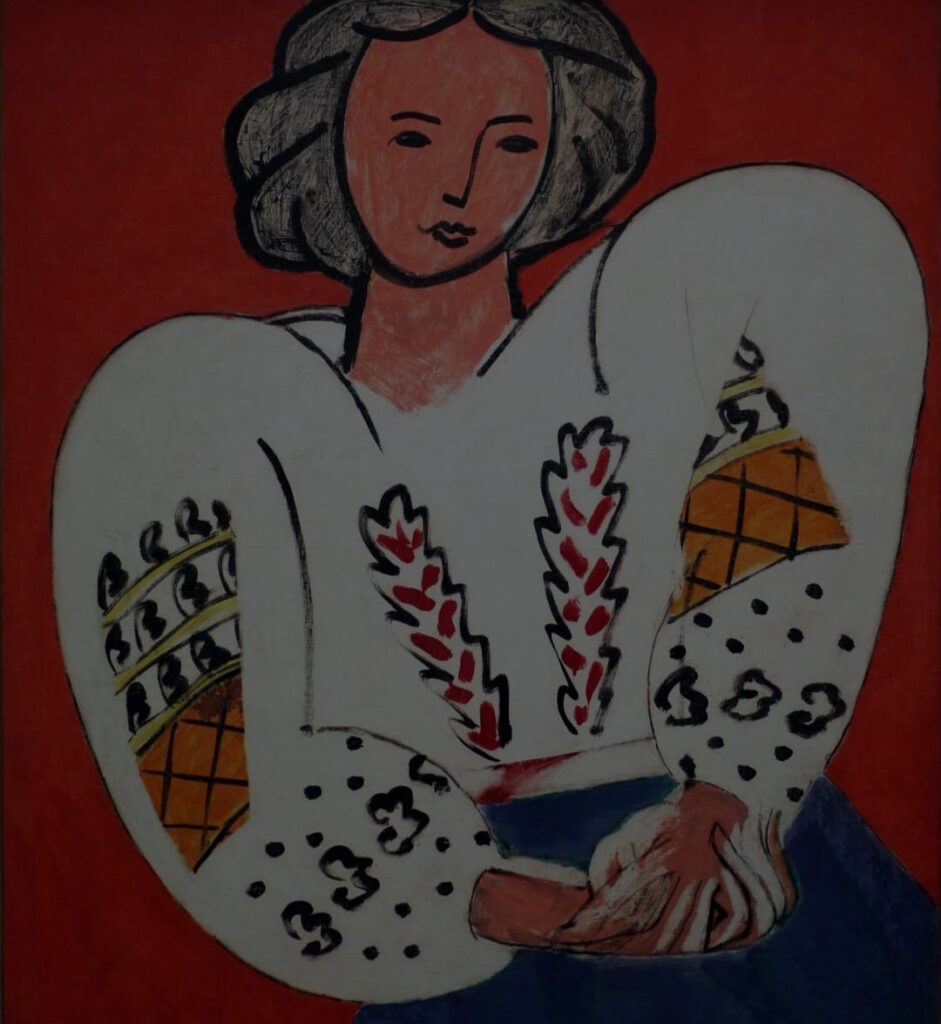
Few garments have managed to so spectacularly cross the boundaries of the culture they come from like the Romanian blouse. One of the artists who helped establish it in world art was the French painter Henri Matisse, with his famous work La Blouse roumaine (1940).
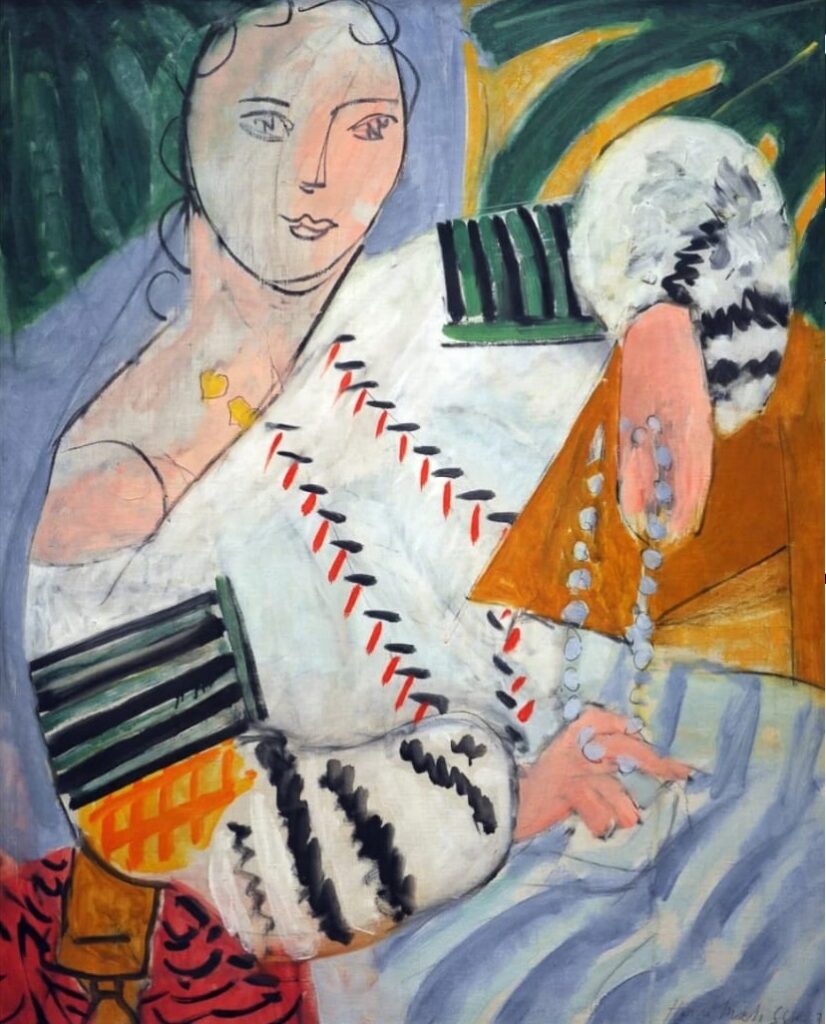
Fascinated by the beauty of traditional fabrics and ornaments, Matisse discovered in the Romanian blouse more than just a piece of clothing: a source of artistic expression. His friendship with the Romanian painter Theodor Pallady helped him get closer to Romanian folk costumes, and the blouses Pallady sent him became important references in his work.
Matisse's artistic language
What makes Matisse's works remarkable is the ability to simplify without losing expressiveness. The artist gradually gives up realistic details and keeps the essentials: line, shape, rhythm, and color.
In the Romanian blouse, embroidery becomes the main character. The wide sleeves, geometric decorations, and color contrast turn the traditional costume into a modern composition. Folk motifs aren't just copied; they're reimagined through a personal decorative language, where repetition, symmetry, and the balance of shapes create dynamism.
It's an important lesson about how tradition can become modern art without losing its identity.
From Matisse to the big fashion houses
The influence of Romanian blouses has moved from painting into the world of haute couture.
A well-documented example is Yves Saint Laurent, who, in the Fall-Winter 1981 Haute Couture collection, directly paid homage to Matisse's work. He reinterpreted the Romanian blouse with embroidery, wide sleeves, and ornamental patterns, turning traditional elements into a sophisticated expression of contemporary fashion.
In the case of Dior, the Pre-Fall 2017 collection, led by Maria Grazia Chiuri, brought back into international attention elements similar to the traditional outfit from Bihor, especially the vests inspired by the local sheepskin coat. The controversy regarding the recognition of the origin of these motifs contributed to the launch of the Bihor Couture initiative, which aimed to promote Romanian craftsmen and clothing heritage.
Another example is Louis Vuitton, whose Resort 2024 collection included a garment noted by the La Blouse Roumaine community as being inspired by the Romanian blouse. The topic sparked an international debate about recognizing and respecting cultural sources, and in 2024 the fashion house withdrew the contested product.
These examples show that traditional Romanian motifs continue to be a source of inspiration for international fashion, but also that adopting them involves the responsibility of acknowledging the heritage they come from.
From Matisse to my own interpretation
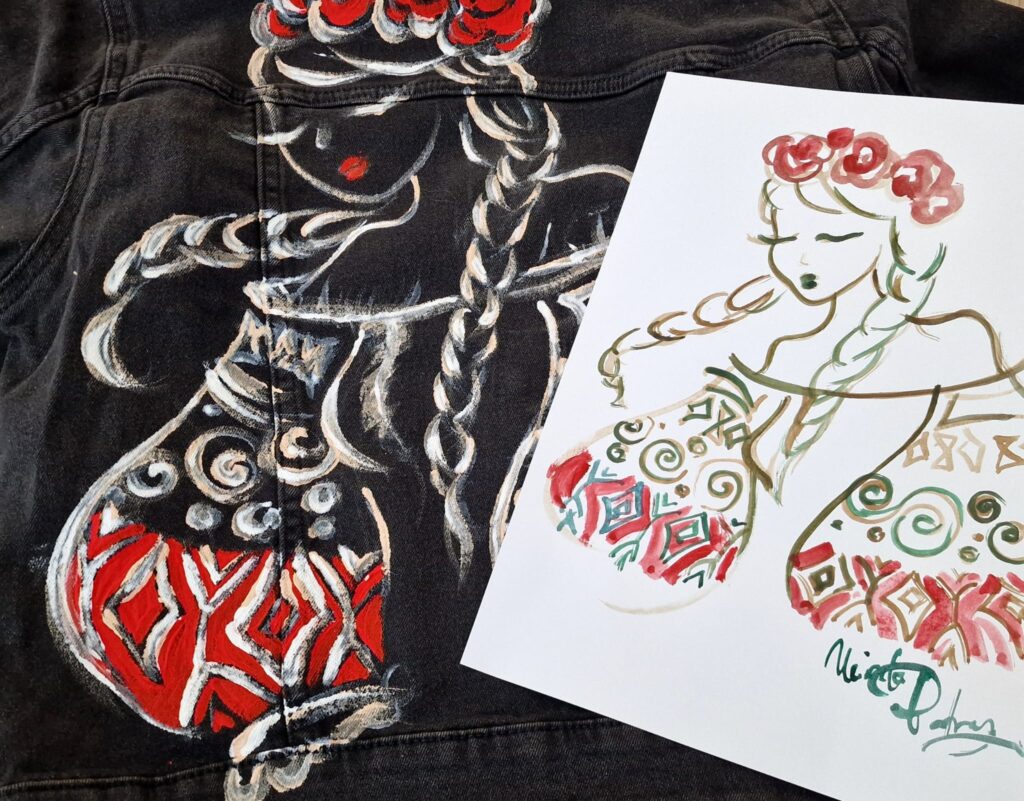
In the drawing made on the black denim jacket, I started from the same fascination with the visual universe of Romanian folk costume.
The female character is built through a few essential elements: the stylized face, the braid, the crown of red flowers, and the richly decorated costume. I chose to use the contrast between the black background, the white lines, and the intensity of the red to create a composition with visual impact.
Geometric shapes, spirals, and decorative repetitions harken back to the language of traditional ornaments, but they're reorganized into a contemporary composition. The embroidery turns into a drawing, and the costume becomes a surface for artistic expression.
If Matisse brought the Romanian blouse onto the canvas of modern art, I choose to bring it onto denim, in a meeting between heritage, painting, and fashion design.
Tradition shouldn't be kept alive just through reproduction. It can continue to live through reinterpretation, through new forms of expression, and through the sensitivity of each artist.